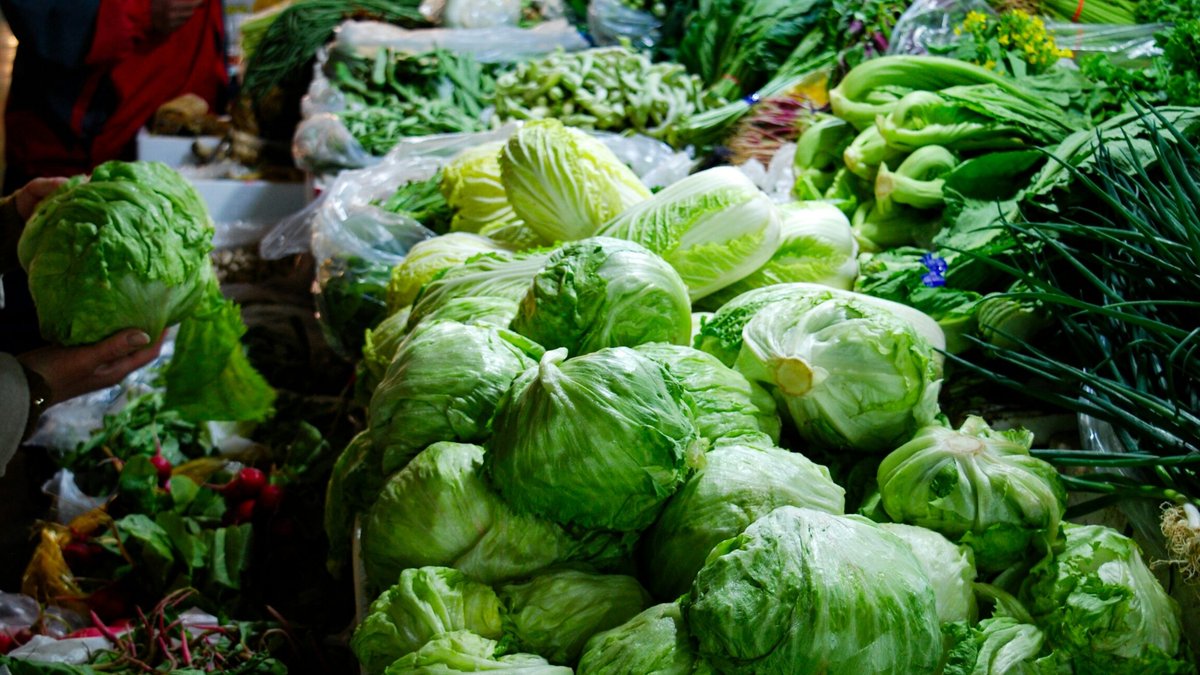
Federal investigators traced a 1,644-case Cyclospora outbreak across five states to a single shredded lettuce supplier without ever testing a positive product sample. The recall, announced in mid-July, revealed ongoing weaknesses in food traceability that will persist even after the FDA’s Food Traceability Rule becomes mandatory in 2028.
How investigators identified the source without lab confirmation
Taylor Farms de Mexico issued a recall on July 17 for all iceberg lettuce shipped from its central Mexico facilities. The FDA connected the product to Cyclospora infections reported in Michigan, Ohio, Pennsylvania, New York, and New Jersey. Michigan recorded 190 cases, with 90% of patients reporting meals from Taco Bell that included shredded lettuce.
The probe depended entirely on distribution records and patient interviews. No lettuce sample produced a reliable positive result for Cyclospora. A single positive finding from July 18 was later dismissed as a false positive, and the FDA publicly corrected its statement two days afterward. The recall proceeded based on what the CDC describes as “traceback convergence”—the point where shipment records and patient accounts intersect at a single source.
This approach has been standard for years. The CDC’s multistate outbreak guidance recognizes it as the default method when lab confirmation is delayed or unavailable. Yet investigations often stall at this stage because records are frequently “missing, incomplete, or not linkable across companies.” Such issues won’t vanish when new regulations take effect.
The 2028 compliance deadline and its limitations
The FDA’s Food Traceability Rule, part of the Food Safety Modernization Act (FSMA) 204, was initially set to begin in January 2026. In March 2025, the agency proposed a 30-month extension, which Congress formalized, moving the deadline to July 20, 2028. The delay reflects the expense and complexity of creating systems to track lot-level data across suppliers, packers, and distributors—particularly for mid-sized businesses weighing automation against other financial priorities.
Related: Shadow Code Poses Hidden Threat to Factories
The extension doesn’t alter the FDA’s existing authority to demand records during outbreaks. That power, separate from FSMA 204, is already active. The lettuce recall showed how it functions: investigators requested records from Taylor Farms and Taco Bell without warning while case counts were still climbing. The rule’s eventual requirements—Critical Tracking Event records with Key Data Elements, deliverable within 24 hours—aim to speed up this process. Currently, it still hinges on what companies can provide immediately.
Most mid-sized manufacturers would struggle to meet such a demand today. If the FDA requested Key Data Elements for a single lot as it moved through receiving, processing, and shipping, would the records exist in a single, linked format? Or would staff need to assemble supplier emails, shipping spreadsheets, and ERP logs, hoping the lot numbers matched? That gap in coordination turns a days-long traceback into a weeks-long effort—and a targeted recall into a broad one.
The outbreak concluded with a named supplier and a recall, all without lab confirmation. The documentation held up. Whether it would for another company remains uncertain before the next emergency arises.
Leafy greens, including iceberg lettuce, appear on the FDA’s Food Traceability List. Once the rule takes effect, any facility handling these foods must maintain records that meet the new standards. Until then, the agency’s current authority is the only enforcement tool available—and it’s already in use.
