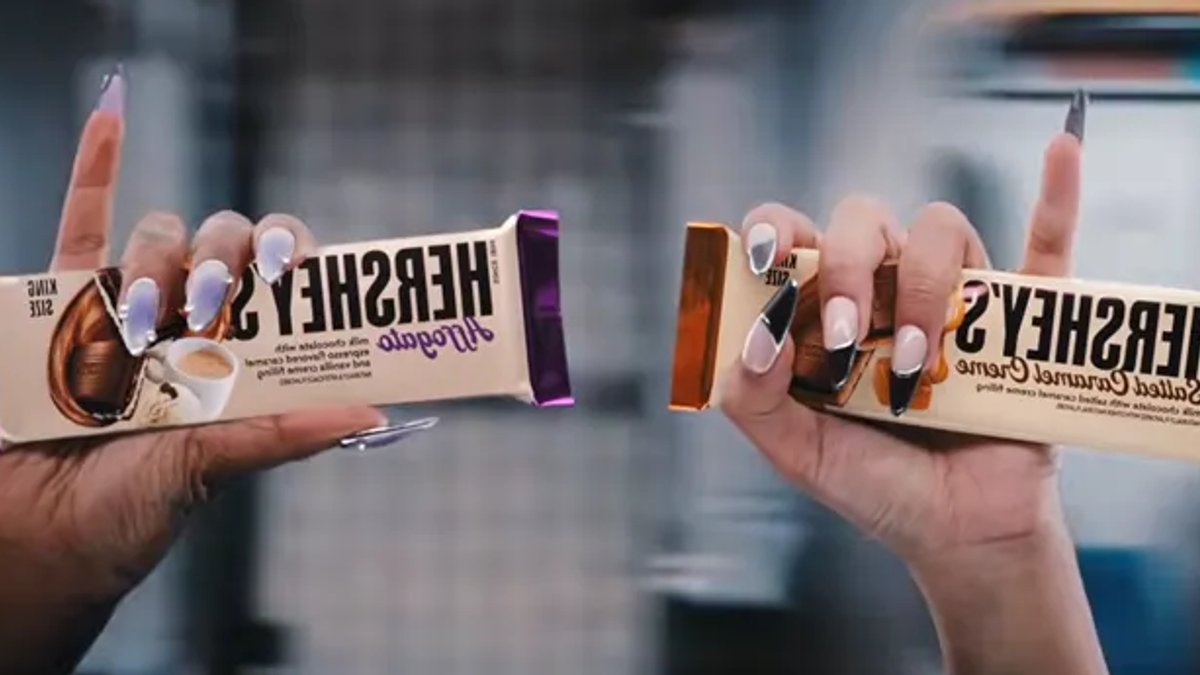
Hershey’s is expanding its chocolate bar lineup with a new product designed to compete in the growing market for creamy, filled confections. The company announced the launch of Hershey’s Creme Bars, a milk chocolate bar featuring a creamy filling in two flavors: Salted Caramel and Affogato. The Affogato variant delivers a coffeehouse-inspired twist with a dual-layer filling featuring espresso-flavored caramel and sweet vanilla creme.
The bars mark Hershey’s latest push into flavor innovation, following recent successes like Jolly Rancher Freeze Dried, Reese’s PB&J cups, and the Reese’s Oreo collaboration with Mondelēz International. While the company has gained attention for its salty snacks business, it continues to invest in sweets, positioning the Creme Bars as a way to attract younger consumers through trend-driven flavors and shareable moments.
Hershey’s is promoting the bars through sampling events and pop-up experiences this fall, along with a partnership with the girl group KATSEYE for a promotional campaign. The company framed the launch as more than just a new product, emphasizing its role in supporting “discovery, self-expression, and shareable moments.”
Related: Reese’s Puffs adds PB&J cereal flavor
Katrina Vatter, senior brand manager at Hershey’s, described the Creme Bars as an evolution of the brand’s strategy. “From the trend-forward flavors to our partnership with KATSEYE, Hershey’s Creme Bars were designed to inspire discovery,” she said. The Salted Caramel variant aims to balance rich caramel with a creamy texture, while Affogato targets coffee lovers with its dual-layer filling.
Creamy Fillings Drive Confectionery Trends
Creamy fillings have become a key trend in the confectionery industry, with competitors like Mondelēz International also experimenting with wafer, nougat, and caramel-based products. Hershey’s move aligns with broader consumer demand for novelty in chocolate, particularly among millennials and Gen Z, who prioritize unique flavor experiences over traditional candy bars.
The company’s focus on limited-time offerings and collaborations suggests a shift toward experiential marketing. By pairing the Creme Bars with KATSEYE—a group known for its viral appeal—Hershey’s is betting on social media-driven engagement. However, the success of such strategies depends on whether the product resonates beyond novelty seekers, given that Hershey’s core customer base remains largely loyal to classic bars like Reese’s and Hershey’s Milk Chocolate.
For consumers, the Creme Bars represent a small but notable addition to the crowded snack aisle. The real test will be whether the creamy texture and coffee-inspired flavors translate into sustained sales, or if they remain a fleeting trend. Unlike traditional chocolate bars, which rely on broad appeal, filled confections often cater to niche preferences—meaning Hershey’s will need to balance innovation with accessibility to avoid alienating its core audience.
Related: Gopuff launches seasonal private‑label product line
Red Baron’s Microwave Pizza Pushes Convenience
Meanwhile, Red Baron is entering the microwave pizza market with a product aimed at convenience without sacrificing texture. The company introduced Red Baron Crunchtime, a 10-inch, multi-serve frozen pizza that cooks in five minutes in a microwave. Unlike single-serve options, Crunchtime is designed to deliver a full-sized pie experience, with flavors including pepperoni, meat trio, and four cheese.
The pizza’s launch comes as frozen dinners gain traction, now accounting for nearly 5% of in-home meal occasions, up from less than 1% in the 1980s, according to Circana data. Half of all meals now take five minutes or less to prepare, a trend that has accelerated since 2021. Red Baron’s move reflects broader industry shifts toward faster, restaurant-style convenience at home.
Katie Hagen, senior marketing manager for Red Baron, positioned Crunchtime as a solution for families seeking quality without the wait. “We’re focused on bringing consumers the flavors and convenience they’re looking for,” she said. The product competes with other microwave-friendly pizzas, including Nestlé’s DiGiorno Wood Fired Style Crust, which launched last year to mimic artisanal baking.
Red Baron’s strategy differs from competitors by emphasizing a multi-serve format, allowing multiple people to share a single pizza. The five-minute cook time aligns with the rising demand for quick meals, though critics may question whether microwave heating can replicate the crispiness of oven-baked crusts. Early reviews will determine if Crunchtime can bridge the gap between convenience and perceived quality, a challenge many frozen food brands have struggled with in the past.
Related: Smoothie King sales surge after flatbread debut
The frozen pizza category has seen steady innovation, with brands experimenting with premium crusts, gourmet toppings, and faster cooking methods. Red Baron’s entry into microwave pizzas suggests a willingness to adapt to changing consumer habits, particularly as dining-at-home remains a priority for many. However, the long-term success of Crunchtime will depend on whether it can deliver on both convenience and taste, a balance that has eluded even established players in the space.
Parent Company Shifts Toward Speed
Red Baron’s parent company, CJ Schwan’s, has historically focused on oven-baked frozen pizzas, but the Crunchtime launch signals a shift toward microwave-friendly products. The move could appeal to younger consumers who prioritize speed over traditional cooking methods, though it may also cannibalize sales from Red Baron’s existing lineup. If the product gains traction, it could set a new standard for microwave pizzas, proving that convenience doesn’t have to come at the expense of flavor.
For now, the Creme Bars and Crunchtime represent two distinct approaches to innovation: Hershey’s betting on premium, experience-driven confections, while Red Baron targets speed and shareability in frozen meals. Both reflect broader industry trends, where brands are increasingly relying on limited-time offerings, collaborations, and convenience-driven products to stand out in crowded markets.
