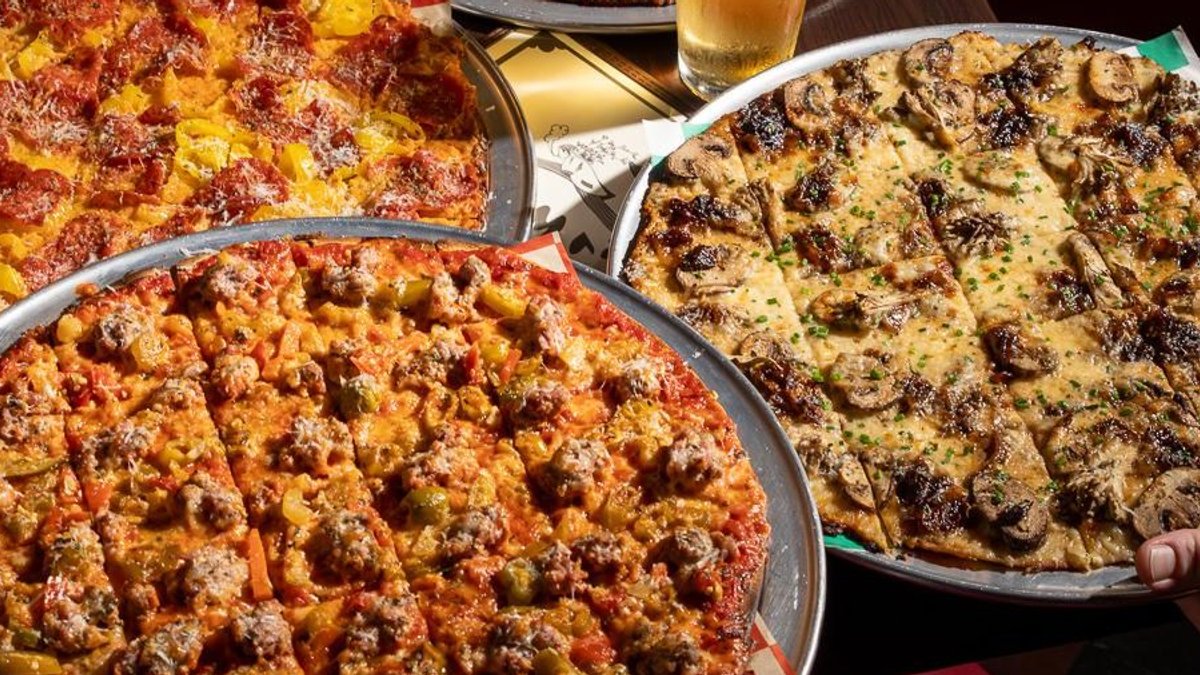
Across the United States, a thin, crisp pizza cut into bite-size squares is gaining traction, a trend that began in the Midwest and now appears in Portland, New York, Los Angeles and beyond. Known locally as tavern-style pizza, the slice-friendly pie is being used by restaurateurs seeking a shareable, casual vibe.
Midwest roots, coast-to-coast spread
In the Chicago suburbs where they were raised, Brittany Grosvenor and Brennan Grosvenor grew up choosing “thin-crust, deep-dish, or double-dough” for Friday night meals. At their Portland eatery Proof, they serve the thin-crust option, now described with the more widely recognized term “tavern-style.”
“The pizza you get every week, or if you go to a kid’s birthday party, it’s always tavern-style,” Brittany says, noting that the iconic deep-dish is a rare treat compared with the everyday thin crust that dominates Midwestern gatherings.
The style is defined by a cracker-like base and a lattice cut that produces square pieces rather than traditional triangles. Sauce profiles vary—some regions favor a sweeter blend, others a spicier mix—but the hallmark remains a light, crunchy texture that encourages communal eating.
Bradley Shorten, who runs both Kim’s Uncle Pizza in Westmont, Illinois, and the newly opened La Merna in Washington, D.C., highlights the practical appeal: a grid yields more portions, and each square carries a bit of every topping, extending to the edge. He adds that the small corner pieces, though not “the best,” are the ones “everybody goes for.”
Read Also: US Resorts Offer Farm-to-Table Culinary Vacations
Recent openings such as Keepers in New York City, One Trick Pony in Fort Worth, Texas, Tillie’s Tavern Pizza in Wheat Ridge, Colorado, and Zarella and Dimmi Dimmi Corner Italian in Chicago illustrate how the style is being used to showcase regional pride and to correct misconceptions about Chicago’s pizza culture.
New takes on the classic
As the style spreads, its impact on local menus may reshape expectations for casual dining. While the increased visibility could boost demand for authentic regional toppings, it also risks homogenizing distinct local twists into a single national product.
When Mike Fadem opened a second Ops location in New York, he introduced a “tavernetta” inspired by St. Louis and New Jersey versions, yet refined with whole-grain sourdough to achieve extra crispness. “I had this interest in ‘can we make an Ops version of this?’” he explains.
In Los Angeles, Brynn Smith of Bar Next Door added “bar pies” to the menu after noticing that patrons often felt full after a slice from neighboring Prince Street Pizza.
Back in Oregon, the Grosvenors have expanded their menu with Midwest staples such as Bosco sticks and Italian beef with giardiniera. “We’re just trying to embody the feeling: If you went into a tavern in Chicago, what could you order there?” Brennan says, explaining that their goal is to recreate the familiar tavern atmosphere on the West Coast.
Read Also: Il Fornaio pays $3 million to settle harassment claims
Lineage and regional variations
Tracing the pizza’s ancestry reveals a chain that begins with classic Neapolitan pies, moves through Chicago’s thin-crust tradition, and then branches into the ultra-thin slices of St. Louis and the bar-style slices of New Jersey. Mike Fadem describes this progression as a process where each region added its own twist as the style traveled.
Fadem acknowledges that his own take, which incorporates whole-grain sourdough for added crunch, may not satisfy purists who prefer the original cheese profile.
The “tavernetta” on Ops’ menu reflects this hybrid approach, merging influences from St. Louis and New Jersey while highlighting the milder, grain-forward crust that appeals to New York diners. The addition sits alongside the restaurant’s existing selections, and groups often order it in tandem with other pies, ensuring it complements rather than replaces the core offerings.
Atmosphere and menu extensions
Shorten’s vision for La Merna extends beyond the pizza itself, aiming to recreate the feel of a classic Midwest dive. The space features wood-panelled walls, checkered flooring, and booths, all designed to encourage patrons to linger over pitchers of beer and a steady supply of square-cut slices.
Food writer Francky Knapp observes that the growing popularity of “tavern” concepts across the country taps into a desire for familiar, lived-in settings where guests can relax without pretense. This ambience pairs naturally with the shareable nature of tavern-style pizza, reinforcing the sense of a neighborhood gathering spot.
