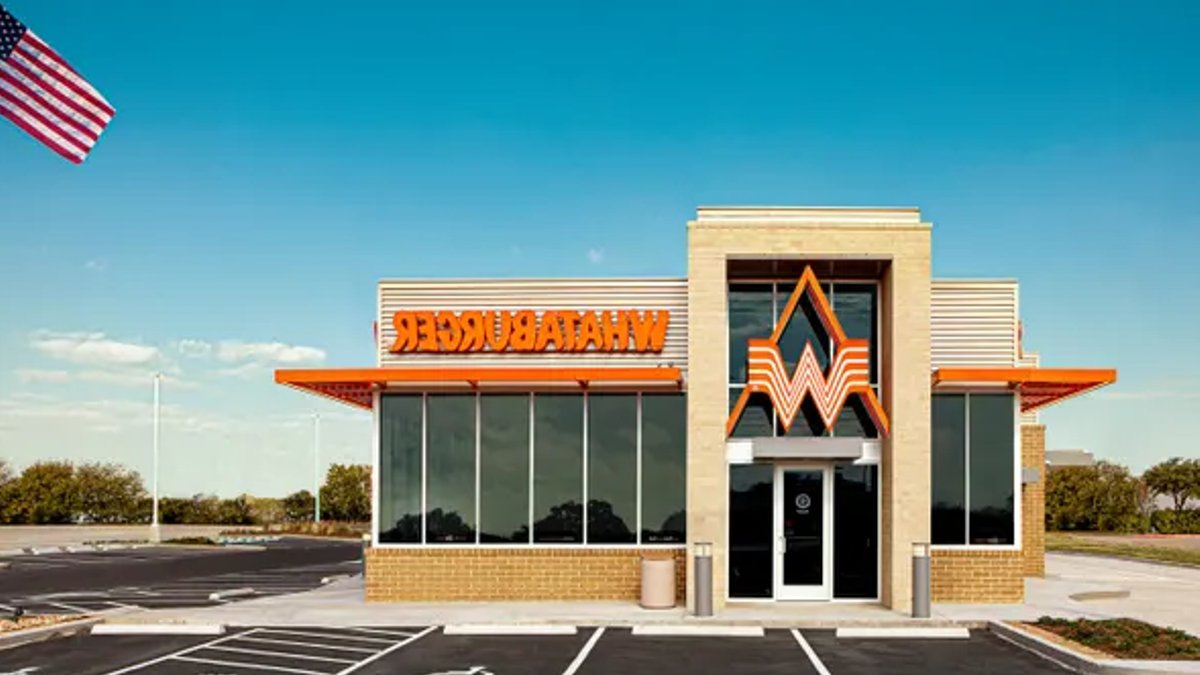
Whataburger has named Ryan Moore as its new chief financial officer, tapping a fast-food veteran with experience at Taco Bell and Torchy’s Tacos as the burger chain expands beyond its Texas roots. Moore’s appointment comes at a key moment for the brand, which has been methodically broadening its operational and geographic reach while preserving the core identity that has fueled its decades-long success. His background in scaling restaurant concepts positions him to handle the financial complexities of Whataburger’s ongoing transformation, particularly as the company balances rapid expansion with the need to maintain the quality and service standards that have defined its reputation.
Moore brings national growth experience to Whataburger
Moore will start his role on July 31, according to a press release issued Tuesday. He joins from MOJO Family of Brands, a multi-brand carwash operator, but his background is firmly in restaurants. Before MOJO, he spent six years as CFO of Torchy’s Tacos, where he played a key role in the brand’s growth beyond its home base of Texas. His tenure at Torchy’s included overseeing financial strategies that supported new market entries and franchise development. Prior to Torchy’s, Moore spent a decade as a vice president of finance at Taco Bell.
The press release highlighted Moore’s track record of helping brands scale beyond their core markets, aligning investments with growth, and preparing organizations for their next phase. That experience could be critical for Whataburger, which has aggressively expanded its footprint in recent years—growing from 860 restaurants across 11 states in 2020 to nearly 1,200 across 17 states today. His expertise in financial planning and analysis will be particularly valuable as Whataburger evaluates new real estate opportunities, franchise partnerships, and capital allocation strategies to sustain its momentum.
Moore will succeed Janelle Sykes, who has served as CFO since 2020. Sykes will stay with the company through September to assist with the transition, ensuring continuity in financial reporting, investor relations, and strategic planning. Sykes’ tenure coincided with “the most expansive period of growth in the brand’s history as Whataburger grew from 860 restaurants across 11 states to nearly 1,200 across a 17-state footprint,” per the press release.
Whataburger’s push beyond Texas
The chain’s growth has accelerated under CEO Debbie Stroud and her predecessor, Ed Nelson. In 2023, Whataburger overhauled its loyalty program, a move that coincided with broader efforts to modernize the brand. The updated program introduced tiered rewards, personalized offers, and seamless integration with the company’s mobile app, all designed to enhance customer engagement and drive repeat visits. This digital-first approach reflects a broader industry trend, where regional chains are increasingly leveraging technology to compete with national giants. Whataburger has also partnered with convenience stores and travel centers, a strategic shift that allows the brand to reach customers in high-traffic locations where traditional standalone restaurants may not be feasible. These non-traditional formats often require lower capital investment and can serve as testing grounds for new markets before full-scale restaurant development begins.
Related: Restaurants demand better quality by 2026
Earlier this year, Whataburger rolled out new development prototypes aimed at reducing construction costs and accelerating build-out timelines. These prototypes include modular designs and streamlined kitchen layouts, which enable faster permitting and assembly while maintaining the brand’s signature aesthetic. The company also introduced interactive packaging and toys in its kids’ meals in May, a move that aligns with its broader strategy to appeal to families and younger demographics. The packaging features augmented reality elements, allowing children to engage with digital content through a smartphone app, while the toys are designed in collaboration with popular entertainment franchises to drive seasonal sales and customer loyalty.
Whataburger’s expansion mirrors a trend among regional chains. Competitors like Zaxby’s and In-N-Out Burger are also eyeing national growth, though Whataburger’s deep Texas roots give it a different kind of momentum. Unlike In-N-Out, which has maintained a slow, deliberate expansion strategy to preserve its cult-like following, Whataburger has adopted a more aggressive approach, opening dozens of new locations annually in markets across the Southeast, Southwest, and Midwest. This strategy carries risks, particularly in maintaining the brand’s reputation for quality and service as it enters unfamiliar territories. However, Whataburger’s ability to adapt its menu and operations to local preferences—such as offering regional specialties or adjusting portion sizes—has helped mitigate some of these challenges. The chain’s commitment to its core menu items, like the Whataburger and Honey Butter Chicken Biscuit, ensures that it retains its identity even as it grows.
Moore’s hiring reflects that shift. While his most recent role was outside the restaurant industry, his years at Torchy’s and Taco Bell—both brands that successfully expanded beyond their original markets—align with Whataburger’s ambitions. The question isn’t whether the chain will keep growing, but how far it can stretch without diluting what made it popular in the first place. Whataburger’s challenge will be to replicate the in-store experience that has endeared it to customers—such as its 24/7 service model and made-to-order burgers—while scaling efficiently. Moore’s financial acumen will be key in allocating resources to areas that drive both growth and customer satisfaction, whether that means investing in employee training, technology upgrades, or real estate optimization.
The chain passed 1,000 locations in 2024, a milestone that would have seemed unlikely a decade ago. For now, Moore’s task is to ensure the numbers keep up with the hype. His first priorities will likely include evaluating the performance of recent expansions, identifying underperforming markets, and determining the optimal mix of company-owned versus franchised locations. Additionally, he will play a key role in securing the capital needed to fund Whataburger’s growth, whether through debt financing, private equity, or other investment vehicles. As the brand continues to push beyond its Texas stronghold, Moore’s ability to balance financial discipline with strategic ambition will be critical in shaping Whataburger’s future as a national player in the fast-food industry.
