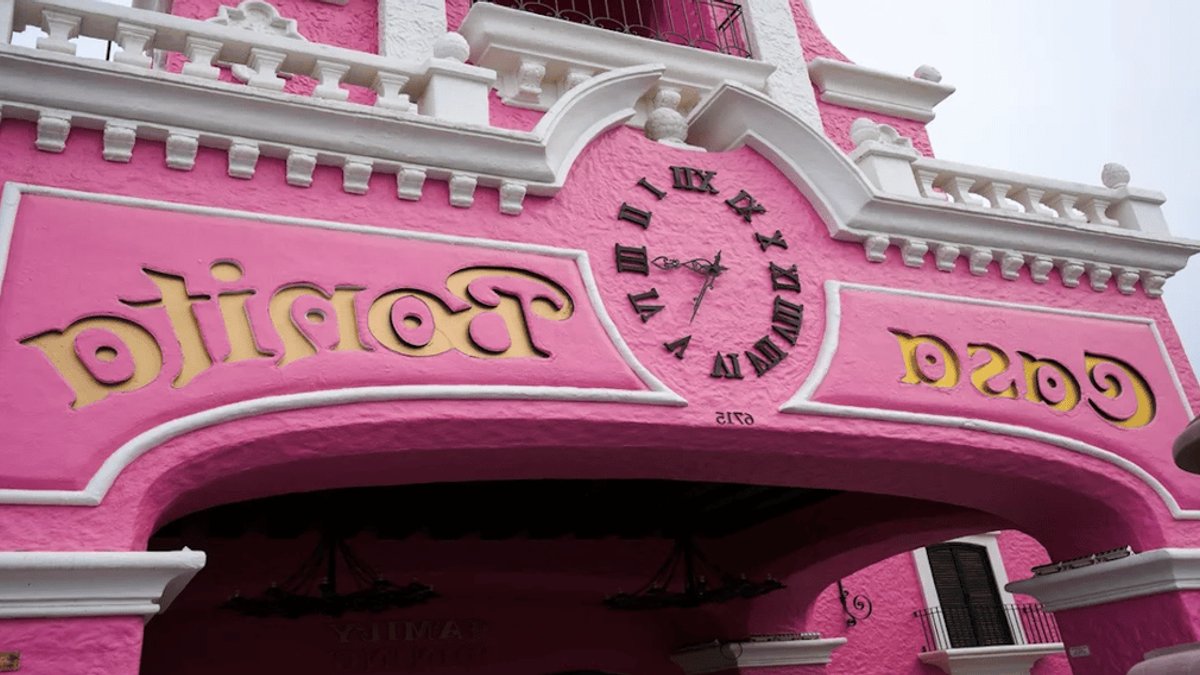
The National Labor Relations Board has filed a complaint against Casa Bonita, the Denver-based Mexican restaurant famous for its theatrical performances and signature Pepto Bismol-pink exterior, over alleged unfair labor practices. A hearing is set for December 7 in Denver.
The complaint focuses on two main violations: the restaurant’s refusal to engage in good-faith bargaining with its unionized employees and discrimination against staff who supported unionization efforts with the Actors’ Equity Association. The labor board’s action follows repeated conflicts between management and the unionized workforce, which includes performers such as cliff divers and puppeteers.
Casa Bonita originally operated as part of a chain of themed restaurants before becoming a standalone attraction. The location nearly shut down during the pandemic and was purchased in 2021 by Trey Parker and Matt Stone, the creators of South Park, who invested $40 million in renovations to restore its operations. Since the acquisition, the staff, represented by Actors’ Equity, has sought improved wages and working conditions.
The union first filed an unfair labor practices charge in September 2024, accusing management of reducing worker hours without consulting the bargaining unit. In response, employees staged a strike during Halloween of that year. Earlier in July 2024, actress and union president Brooke Shields visited the restaurant to publicly endorse the workers’ demands.
The NLRB’s complaint shows ongoing disputes between Casa Bonita and its employees. According to the labor board, the restaurant’s actions have obstructed the unionization process, which began when workers voted to join Actors’ Equity in November 2024. The union’s general counsel, Andrea Hoeschen, described the NLRB’s intervention as confirmation of workers’ claims, noting that management had favored opposition over constructive negotiations.
The hearing will examine whether Casa Bonita violated labor laws, but the case also reflects the broader difficulties of reviving an entertainment-based business. The restaurant depends heavily on performers, many of whom are union members, meaning labor conflicts could disrupt its operations. The ruling may influence how comparable venues address unionization in the future.
The unionization push began after employees voted to join Actors’ Equity in November, a decision management contested through delays and resistance. Hoeschen emphasized that the NLRB’s filing demonstrated the seriousness of the workers’ grievances, particularly the refusal to recognize the union’s bargaining rights. The hearing will determine whether the restaurant’s actions constituted violations under federal labor law.
Since Parker and Stone’s acquisition, the restaurant has faced criticism over labor practices, including allegations of wage suppression and scheduling changes without union approval. Workers have cited instances where management unilaterally reduced hours, prompting the strike in October. The NLRB’s intervention follows months of escalating tensions, with the union accusing the company of retaliatory actions against supporters.
