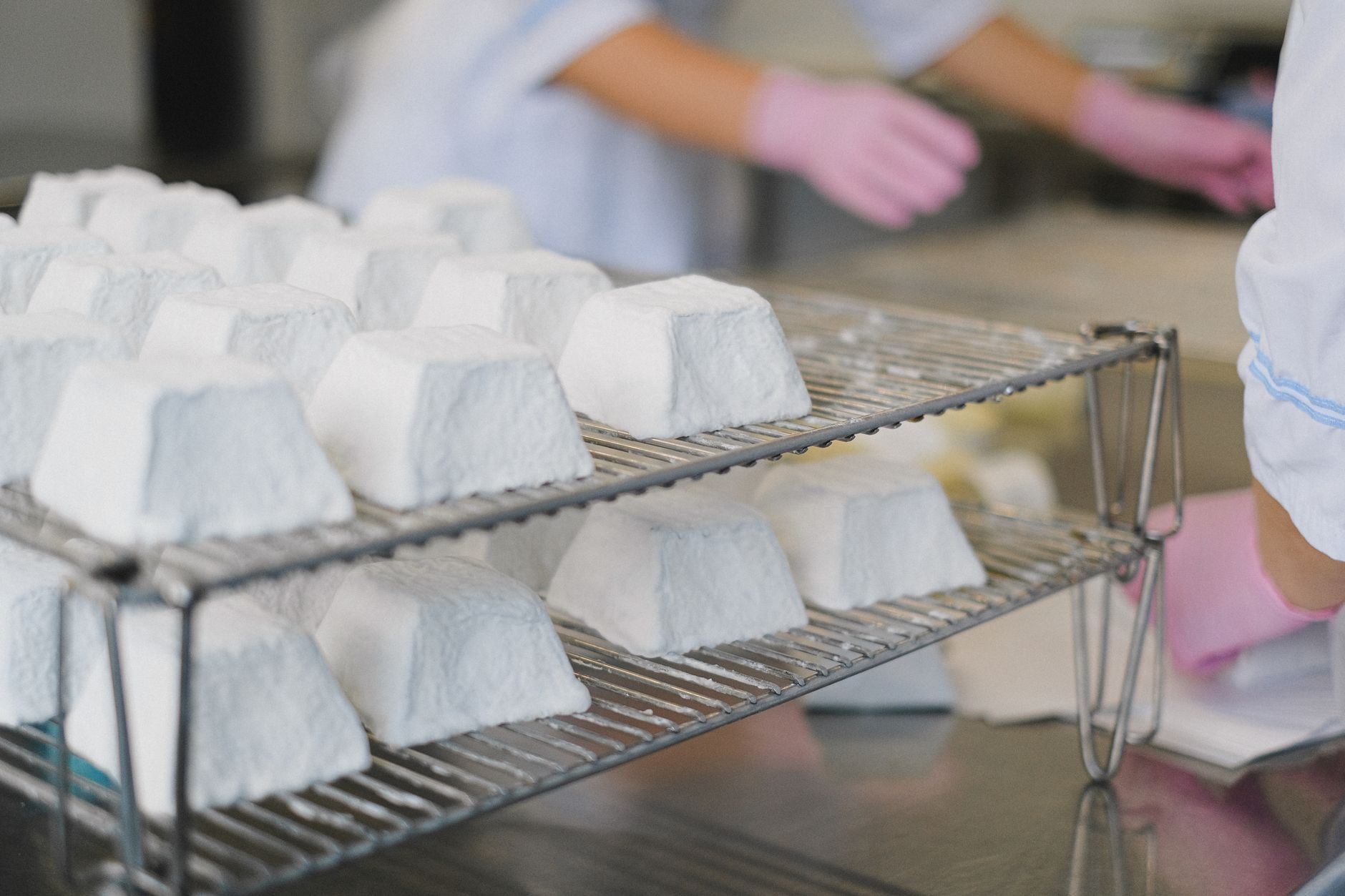
Dairy plants that rely on open trolleys and manual handling create a direct pathway for Listeria biofilms to persist, according to an analysis by Wayne Kendall, a regional business development manager at Watson-Marlow Fluid Technology Solutions. The fix is switching to closed-system pumping, which eliminates the exposure point rather than depending on more aggressive cleaning of containers that are difficult to sanitize.
The stakes are well documented. Dairy products alone accounted for 10% of foodborne illness investigations in recent FDA reports, Kendall notes. Upgrading processing technology is a direct attempt to cut those numbers.
Related: Celebrate your birthday at work with mangia catering.
Manual transfer: a bottleneck and a safety threat
Many facilities still use 200-liter trolleys to move product from pasteurization to mixing. That creates constant coordination between shifts, high labor costs, and a slow production line. Every time a worker wheels an open container across the plant floor, the product is exposed to environmental contaminants. Those intermediate containers are “notorious for harboring persistent pathogens, particularly Listeria monocytogenes biofilms,” Kendall writes.
Research shows that food contact surfaces with inadequate cleaning are a primary pathway for pathogen persistence. Open containers also increase the risk of spills, making a sanitary environment harder to maintain. Cleaning those trolleys manually is labor-intensive and inconsistent.
Closed systems remove the middleman container
Moving to a closed system means pumping product directly from one stage to the next, eliminating the need for intermediate trolleys and the error-prone handling that goes with them. Kendall calls this “effectively removing the ‘middleman’ container.” The pipelines are compatible with automated Clean-in-Place (CIP) systems, which run standardized chemical and thermal sanitation cycles that are more reliable than a person with a scrub brush.
Related: How to Diversify Your Diet if You Want to Eat Right
Automated pumping allows for consistent sanitation protocols that reduce the “zero load” of pathogenic microbiota. Dairy processors must “aggressively manage Listeria risks for both consumers and processors,” Kendall says.
Labor savings and smoother workflows
Automated product movement replaces the chaotic traffic of workers pushing trolleys across the floor. Operators who used to spend hours moving and washing heavy containers can be shifted to quality assurance or system monitoring. The result is reduced operational variability and more predictable production timing.
Dairy processors are under pressure to scale throughput and maintain efficiency in increasingly complex environments. Despite modernization elsewhere, many still depend on outdated open methods. Automation can close that gap, but only if plant managers evaluate their current processes and identify the manual bottlenecks.
Related: Get Halal Foods Delivered to You from Local Los Angeles Halal Stores with Bakkal Mobile Application
One concrete example: placing a pump immediately after the cooking stage to automate transfer to mixers or filling lines. That single move removes the risks inherent in manual dairy product handling and aligns with the broader shift toward closed, automated environments that produce safer, more uniform output.
For dairy plant managers, the decision protects both financial performance and product integrity. Moving away from open handling reduces contamination risk and establishes a production setting that meets modern hygiene standards without relying on inconsistent manual labor.
